

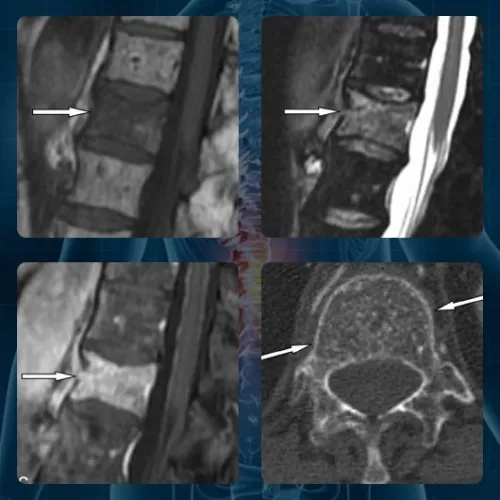
Navigating the Maze: Management Strategies for Atypical Vertebral Haemangioma
In the ever-evolving landscape of spinal healthcare, the management of atypical vertebral haemangioma poses a unique set of challenges, compelling spine specialists to navigate a myriad of treatment options with precision and care. Our recent publication in the Global Spine Journal (GSJ) delves deep into this complex terrain, shedding light on the diverse management modalities available to clinicians and offering insights into the decision-making process.
At the heart of the discussion lies a plethora of management options, each with its own merits and considerations. From the minimally invasive approach of vertebroplasty to the targeted precision of CT-guided alcohol ablation, and from the therapeutic potential of external beam radiation to the surgical interventions of posterior decompression and anterior corpectomy, the array of choices can be overwhelming for both patients and providers alike.
Indeed, even within the realm of surgical intervention, the decision dilemma persists. Spine specialists are often faced with the daunting task of choosing between posterior decompression and anterior corpectomy, each pathway fraught with its own set of implications and considerations. Complicating matters further is the question of whether to proceed with transarterial embolisation of the feeding vessel before surgery—a conundrum that adds an additional layer of complexity to the treatment algorithm.
In our quest for clarity amidst this sea of uncertainty, we embarked on a systematic review guided by the principles of the Preferred Reporting Items for Systematic Reviews and Meta-Analyses (PRISMA) guidelines. Our analysis sought to distill the existing evidence and offer a structured approach to the management of atypical vertebral haemangioma, anchored by the presence or absence of clinical symptoms, particularly neurological symptoms.
The findings of our review paint a nuanced picture of the optimal management strategies for this challenging condition. We propose an algorithm that delineates the role of transarterial embolisation in the context of posterior decompression versus anterior corpectomy surgeries, providing clinicians with a practical framework for informed decision-making.
Central to our algorithm is the recognition that while transarterial embolisation may not be necessary in posterior decompression surgeries, it emerges as a crucial adjunct in the setting of anterior corpectomy. By aligning treatment decisions with the unique clinical profile of each patient, we aim to optimize outcomes and enhance the delivery of patient-centered care.
As we navigate the maze of management options for atypical vertebral haemangioma, our publication serves as a beacon of guidance for clinicians worldwide. Armed with evidence-based insights and a commitment to excellence, we stand poised on the frontier of spinal healthcare, driven by the unwavering belief that every patient deserves the best possible chance at a life free from the burdens of disease.